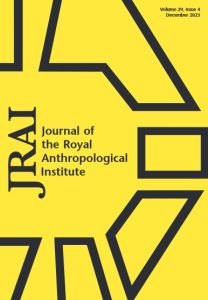




Embracing Uncertainty: Porous and Actionable Responses to Climate Change at the Borders of Indigenous and Scientific expertise(s) in Siberia.
Ulturgasheva, O. & Stelmaszyk, M. 2024, In: Journal of the Royal Anthropological Institute. 31, 1, pp-1-19.
https://doi.org./10.1111/1467-9655.14163
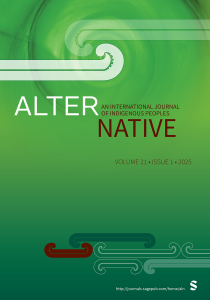
Stelmaszyk, M. & Sungorkin, L., 13 Sept 2024, In: AlterNative . 20, 3, p. 531-539 9 p.
https://doi.org/10.1177/11771801241261718
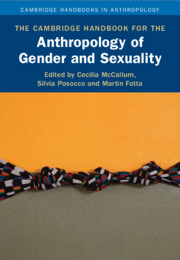
Gender in Decolonial Indigenous Perspective
Ulturgasheva, O. 2023, In: C. McCallum, S. Posocco, M. Fotta (eds.), The Cambridge Handbook for the Anthropology of Gender and Sexuality. Cambridge University Press, pp. 370-394.
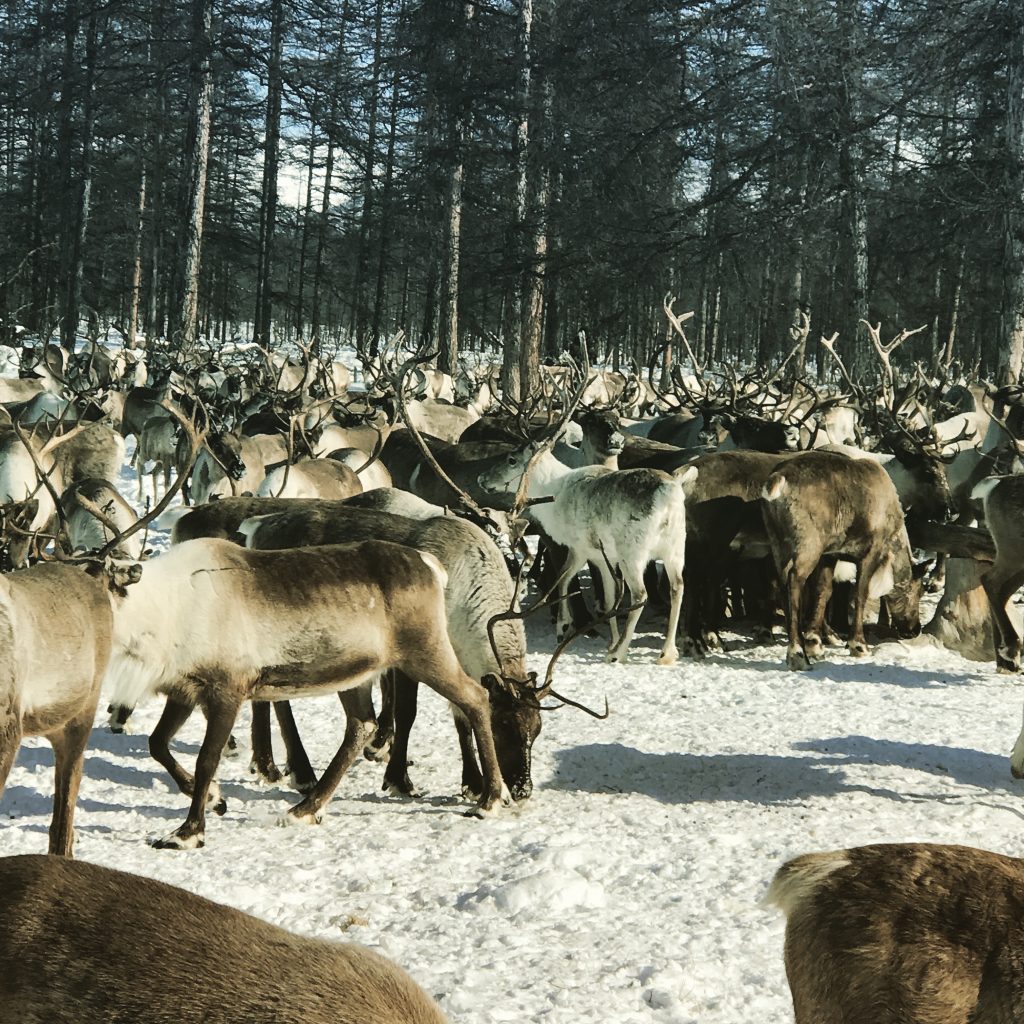
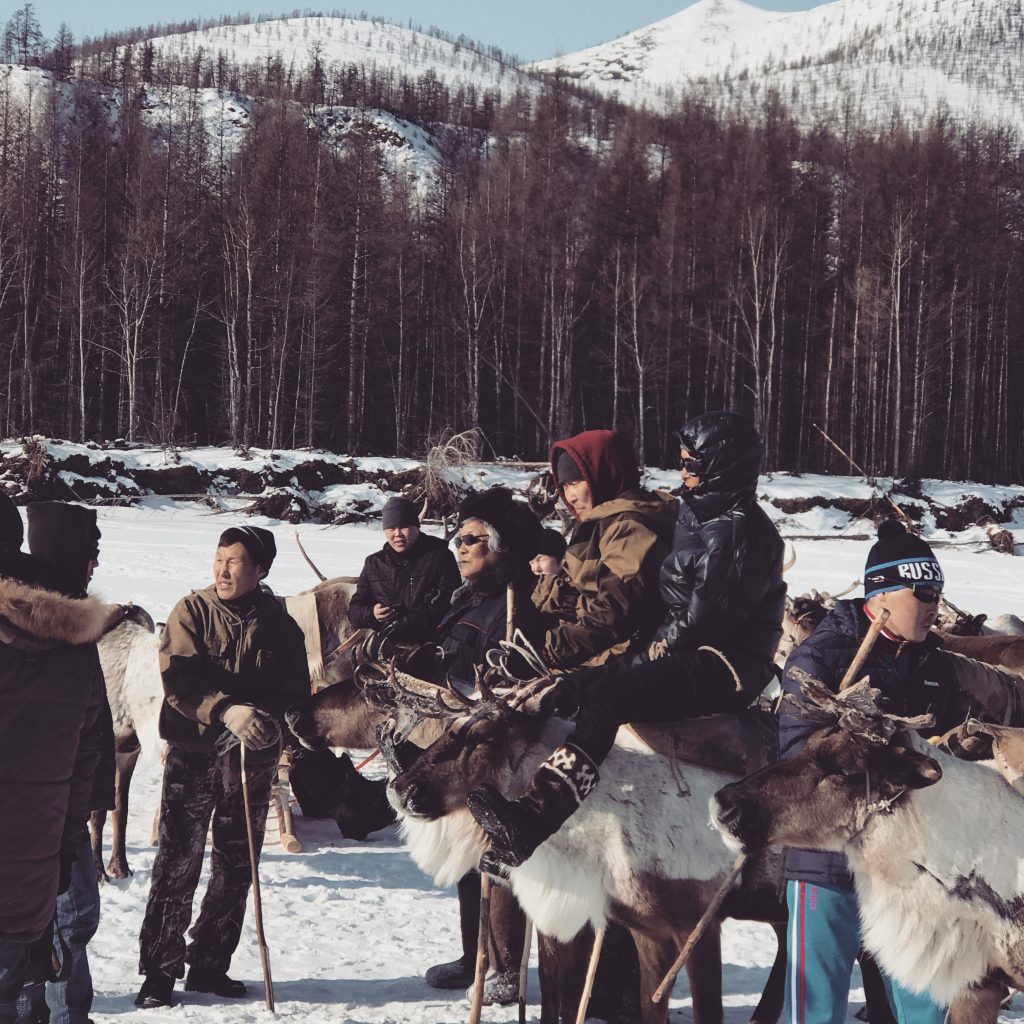
The volume examines complex intersections of environmental conditions, geopolitical tensions and local innovative reactions characterising ‘the Arctic’ in the early twenty-first century. What happens in the region (such as permafrost thaw or methane release) not only sweeps rapidly through local ecosystems but also has profound global implications. Bringing together a unique combination of authors who are local practitioners, indigenous scholars and international researchers, the book provides nuanced views of the social consequences of climate change and environmental risks across human and non-human realms.
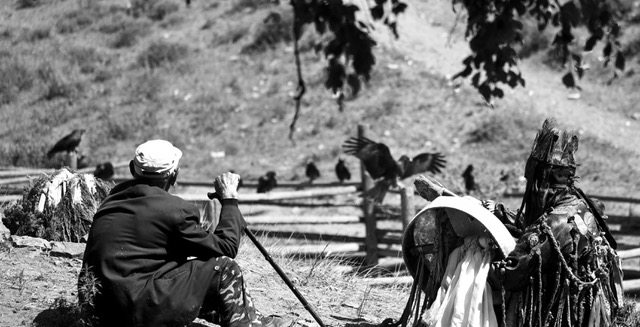
The focus of this book is on the phenomenon of cursing in shamanic practice and everyday life in Tuva, a former Soviet republic in Siberia. Based on extensive anthropological fieldwork where the author interacted with a wide range of people involved in cursing practices, the book examines Tuvans’ lived experience of cursing and shamanism, thereby providing deep insights into Tuvans’ intimate and social worlds. It highlights especially the centrality of sound: how interactions between humans and non-humans are brought about through an array of sonic phenomena, such as musical sounds, sounds within words and non-linguistic vocalisations, and how such sonic phenomena are a key part of dramatic cursing events and wider shamanic performance and ritual, involving humans and spirits alike. Overall, the book reveals a great deal about occult practices and about social change in post-Soviet Tuva.
https://doi.org/10.54760/001c.38826
Abstract: Rapid Arctic warming demands ways of knowing that stretch beyond familiar disciplinary and onto-epistemological boundaries. This paper explores what might emerge when Indigenous principles of co-operation (bilaek) and human–reindeer partnership (nyamnin) encounter permafrost science. Ethnographic accounts of such encounters suggest that Siberian reindeer herders and permafrost researchers can weave partial knowledges into fragile but promising alliances—even as neo-colonial silos continue to privilege technocratic authority. Nyamnin may offer a decolonial ethic for reimagining research relations, while bilaek gestures toward reciprocal, accountable gatherings of scientists, Indigenous experts, and non-human kin. By interlacing these perspectives, I explore how kincentric and decolonial collaborations could open new paths for risk mitigation, repoliticise science as a situated practice of care, and sketch possibilities for more-than-human climate resilience across plural Arctic worlds.
RAI Research Seminar: Mally Stelmaszyk
Thinking beyond the drum: climatic uncertainties and shamanic practice in Siberia.
Tuesday, 22 July, 4.00-6.00pm (BST)
In this presentation, I explore shamanic practice as engaged in navigating and responding to the ongoing climatic uncertainties in Far East Siberia. Introducing remote and digital fieldwork methods, I trace the way a Nanai shaman brings together diverse techniques, such as shamanic dreams, storytelling, Christian prayers and game playing to materialise fragile moments of porosity between different systems of noticing-knowing-doing. Focusing on the tensions that this process implies, the presentation offers reflections on uncertainty as a productive concept widening our understanding of resistance, protest and resilience in areas of enforced silence and neglect. The insights provide further an opportunity to think about conceptual models addressing cross-disciplinary commitments in relation to climate change and the place of shamanic thought and practice within them.
Link to a recorded presentation coming soon.
2022 American Anthropological Association Annual Meeting – Nov. 9-13, Seattle, WA.
Our Panel: Weathering Uncertainty: Mitigation, Adaptation and (Co)production of Knowledge.
Papers:
Wildfires, Satellites and Foretelling Reindeer: Readings and Mis-Readings of Environmental Uncertainty in Northeast Siberia
Olga Ulturgasheva (University of Manchester)
Curious Government: Environmental management and managing bureaucracy about the English countryside in uncertain times
Jonathan Woolley (DEFRA, Department for Environment, Food and Rural Affairs, UK)
Certainty of Uncertainty
Nina Kruglikova (University of Manchester)
Living dream: uncertain cosmological crossings and climate change among the Nanai in the Siberian Far East
Mally Stelmaszyk (University of Manchester)
Our Discussant: Barbara Bodenhorn (University of Cambridge)
Dickinson College (Carlisle, PA) presents, “Sliding Earth: Arctic Indigenous Cryo-Worlds, Environmental Risks and Human-Non-Human Collaborations,” with Dr. Olga Ulturgasheva and Sayan Ulturgashev, September 2022.
Accounts of dramatic environmental change offered by Arctic Indigenous communities and international climate scientists have recently pointed to a profound sense of unpredictability generated by the rapidly disappearing cryosphere. There are reports of the unprecedented extinction of ice-dependent worlds and of increasing likelihood for thousands of towns and villages to be threatened by rising sea levels and loss of the sea ice. All of the above will only intensify in the course of the next couple of decades, with methane released by rapidly thawing permafrost. The continuous and rapacious extraction of subsurface resources makes it increasingly clear that an ice-free Arctic is no longer located in the distant future but is lurking just around the corner. This lecture will examine the ways Arctic/Siberian Indigenous communities respond to unpredictable climate events and the knowledge, strategies, and human-non-human collaborations they draw from to face environmental calamities.
Some words Sayan Ulturgashev, Indigenous Choreographer, about Dickinson’s Ballet Certificate Program’s performance of Eveny Melody:
My name is Sayan Ulturgashev, I am an indigenous classical ballet dancer and choreographer. It has been my huge honour to prepare and work together with Dickinson college on this special event – the ballet piece called “Eveny Melody” that will be performed in front of you right now. This event is special not only for Dickinson college but for all Siberian indigenous artists and especially for our native Eveny reindeer herding community. The entire project was completed in collaboration with indigenous artists and singers from Siberian Eveny community. The indigenous artist designed the costume for each dancer individually, the songs were performed by Siberian Eveny community members upon my request specially for this performance.
We, indigenous artists, worked together with the Director of Dickinson ballet program, Sarah Skaggs and stagecraft expert, Sherry McCombs, and everyone who were involved in production, especially brilliant students who worked very hard over last month to make sure the ballet performance happens tonight!
Their hard work is an act of solidarity with Siberian indigenous communities who suffered colonial violence and oppression for centuries. The silent genocide committed against them continues today. And the very fact that the performers whom I auditioned, interviewed and invited to dance in this ballet are the students of Dickinson college is very much a powerful expression of their support for all indigenous people around the world, indigenous arts and creativity.
| Cookie | Duration | Description |
|---|---|---|
| cookielawinfo-checbox-analytics | 11 months | This cookie is set by GDPR Cookie Consent plugin. The cookie is used to store the user consent for the cookies in the category "Analytics". |
| cookielawinfo-checbox-functional | 11 months | The cookie is set by GDPR cookie consent to record the user consent for the cookies in the category "Functional". |
| cookielawinfo-checbox-others | 11 months | This cookie is set by GDPR Cookie Consent plugin. The cookie is used to store the user consent for the cookies in the category "Other. |
| cookielawinfo-checkbox-necessary | 11 months | This cookie is set by GDPR Cookie Consent plugin. The cookies is used to store the user consent for the cookies in the category "Necessary". |
| cookielawinfo-checkbox-performance | 11 months | This cookie is set by GDPR Cookie Consent plugin. The cookie is used to store the user consent for the cookies in the category "Performance". |
| viewed_cookie_policy | 11 months | The cookie is set by the GDPR Cookie Consent plugin and is used to store whether or not user has consented to the use of cookies. It does not store any personal data. |